


A clear, rated survey for a conventional home Formerly known as a HomeBuyer Report
A Level 2 Home Survey gives you a clear, rated picture of a conventional property in reasonable condition — flagging the defects and risks worth knowing before you commit, without unnecessary technical detail. Carried out by RICS-qualified surveyors and Registered Valuers, with drone roof inspection and a complimentary solicitor's summary included.

"Buying a home is one of life's biggest decisions. Our reports highlight what matters most — clearly explaining any issues, risks and next steps — so you can negotiate with confidence or buy with peace of mind." Dan Knowles FRICS · Managing Director & RICS Registered Valuer
A Level 2 Home Survey — formerly the HomeBuyer Report — is the right choice for a conventional property in reasonable condition. It assesses the readily accessible parts of the home, rates each element on a clear condition scale, and flags the defects and risks worth knowing — the essentials, without wading through unnecessary technical detail.
Choose a Level 2 if you're buying a conventional house, flat or bungalow built from common materials and in reasonable order. For older, heavily altered, unusual or run-down properties, a Level 3 survey gives you the fuller picture.
Not sure which level you need? We're happy to quote for both a Level 2 and a Level 3, and explain the difference for your specific property — so you pay for the right level of detail, not one size fits all.
Market-leading reports, in plain English
Every report complies with the RICS Home Survey Standard. Download a full sample and the solicitor's summary that comes with every survey.
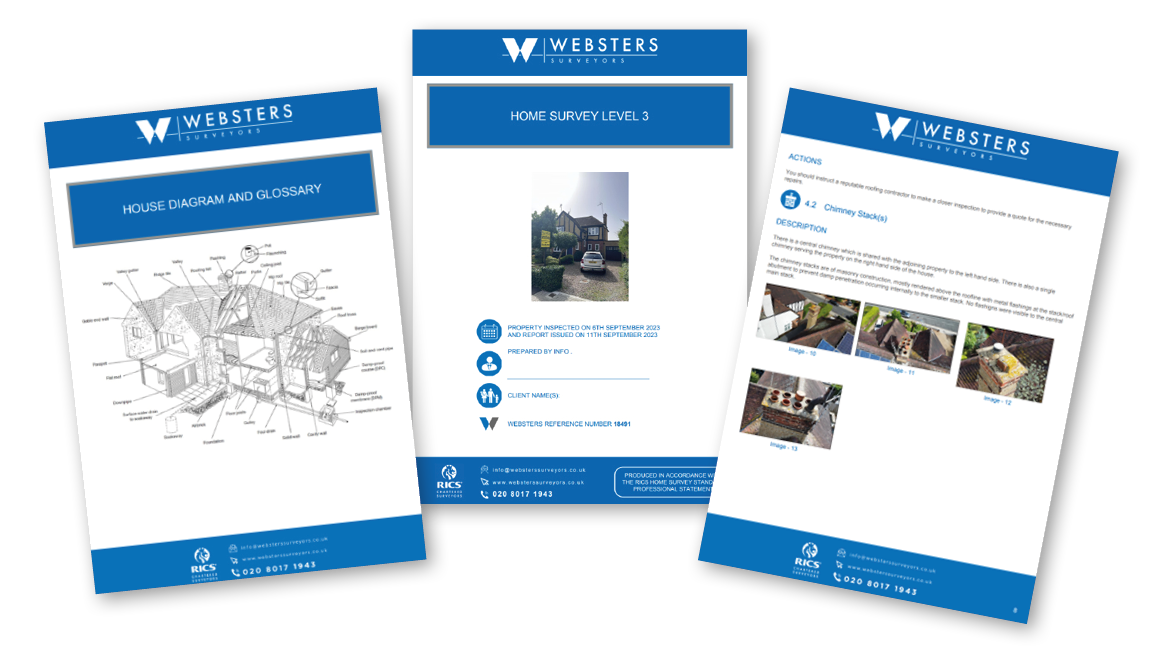
An example of our Level 2 report
See how we rate each element and set out the defects worth knowing — and what they mean for you, the buyer.
Download sample report (PDF)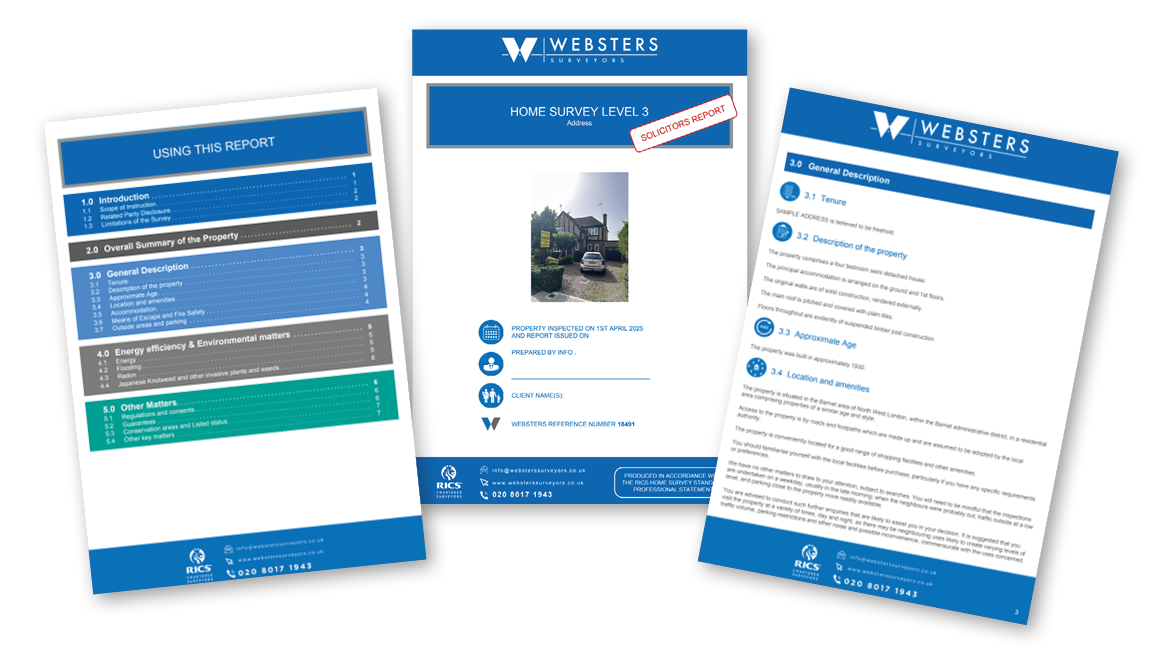
A summary report for your solicitor
We provide a complimentary solicitor's summary with every survey, written to help speed your purchase from an informed position.
About the solicitor's summaryWhat your Level 2 report gives you
A Level 2 survey gives you a clear, rated picture of the property and flags the issues worth knowing before you commit. Your report covers four things in particular.
A clear, rated report you can act on at a glance
We assess the readily accessible parts of a conventional home and rate each element on a simple condition scale — so you can see what's sound, what needs attention and what's urgent, without unnecessary technical detail.
The defects and risks worth knowing before you commit
We identify visible defects and anything serious or potentially dangerous. Where something can't be fully judged on a visual inspection, we tell you what warrants further investigation before you exchange.
Help to budget for repairs and ongoing upkeep
The report helps you budget for the repairs the property is likely to need and explains the ongoing maintenance to expect as an owner — so there are fewer costly surprises after you move in.
Guidance for your legal advisers
We flag the points your conveyancer needs to know, and include a complimentary solicitor's summary to keep your purchase moving from an informed position.
What a Level 2 survey uncovers
A selection of the defects and risks we routinely assess, photograph and explain in our reports.
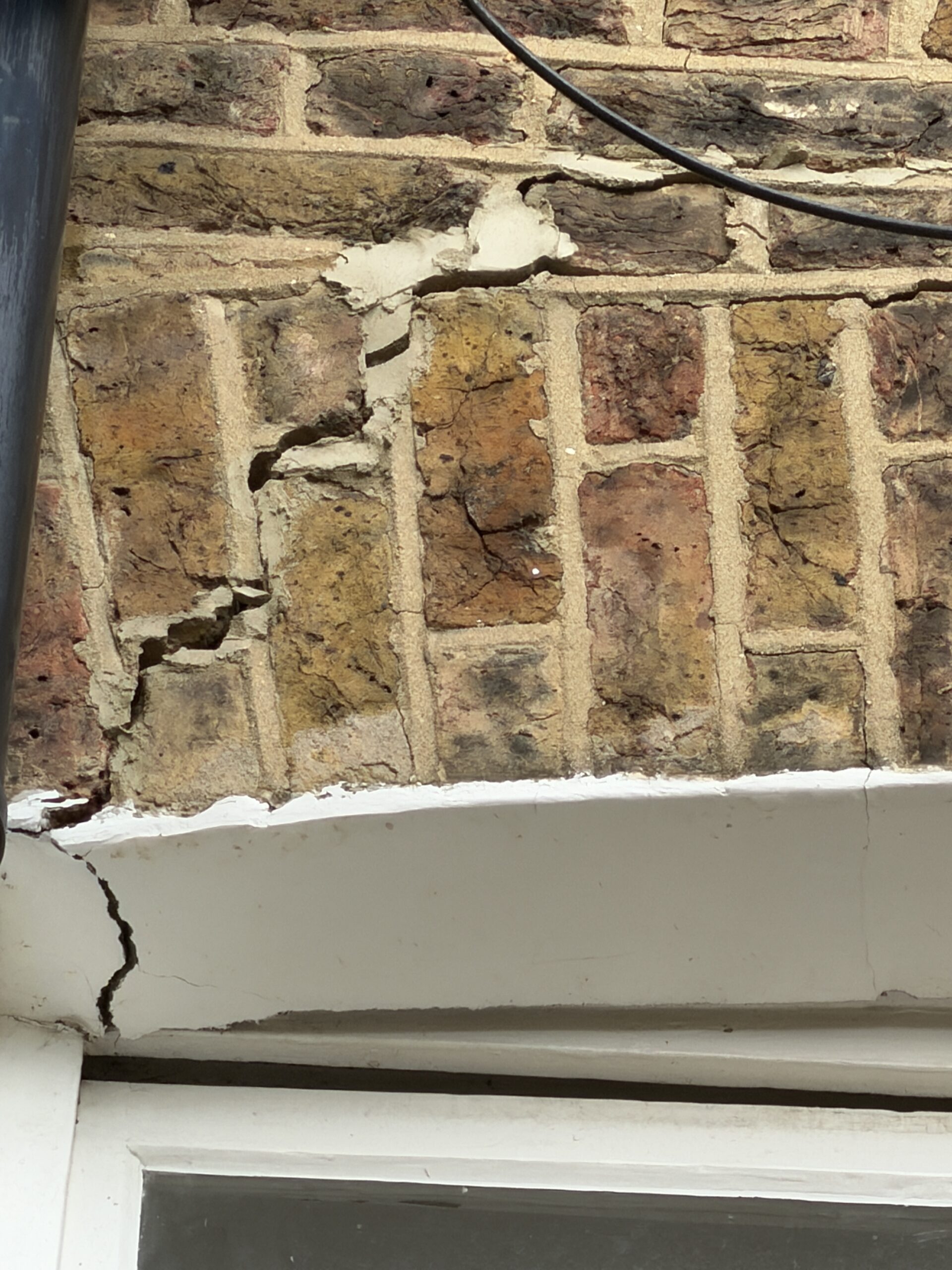
Structural movement
Above the bay window, pronounced stepped cracking and displacement were observed within the external brickwork together with associated cracking to the bay structure below. The pattern and extent of cracking are consistent with structural movement, likely affecting the masonry surrounding the bay opening. Defects of this nature are commonly associated with factors such as differential settlement, clay subsoil movement, tree influence, inadequately supported bay construction or deterioration of concealed structural support. If left unresolved, the movement could worsen, leading to further cracking, local instability and increased risk of water penetration
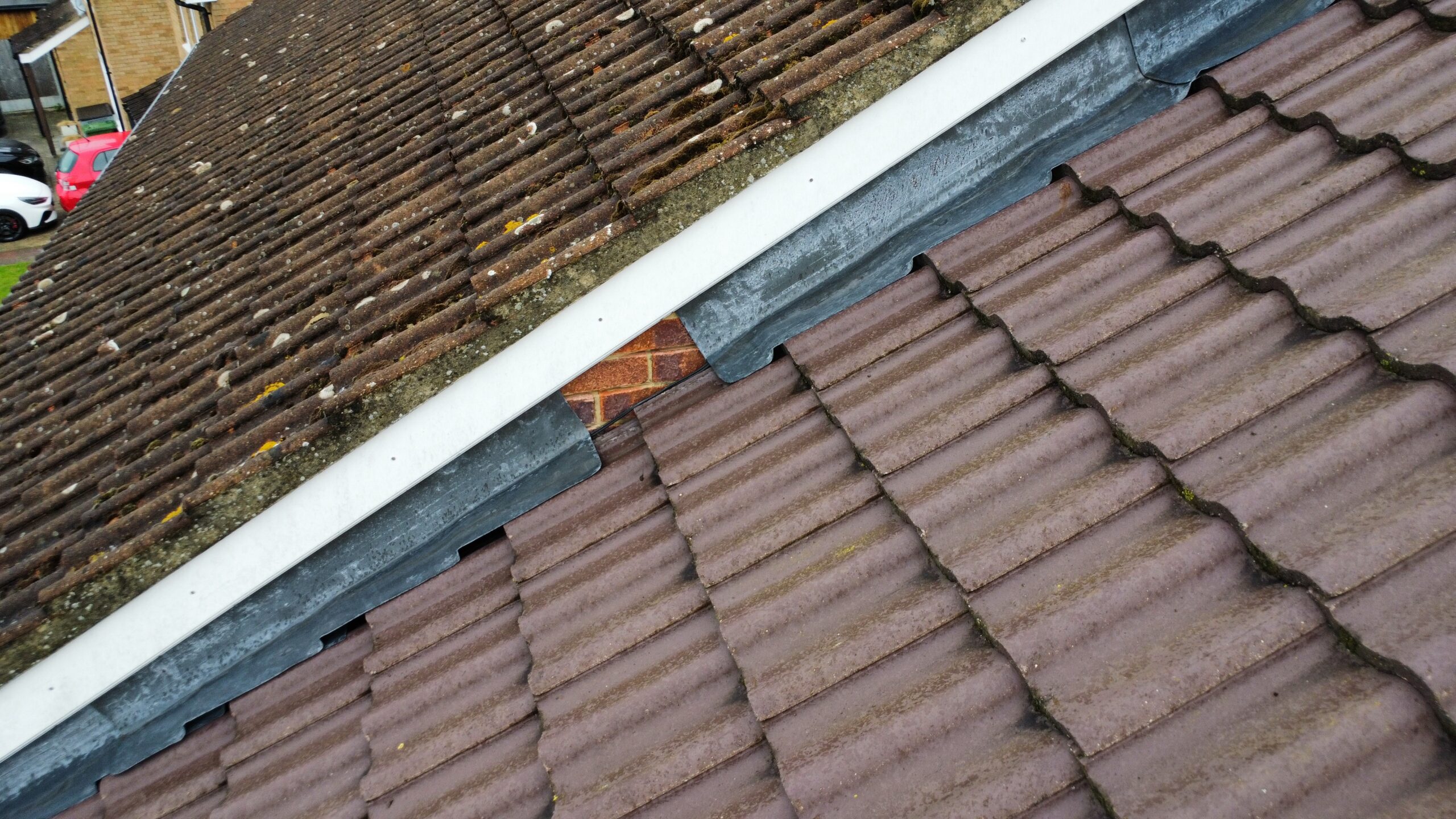
Roof coverings & flashings
At the junction of a double storey side extension, slipped and poorly detailed lead flashing was observed at the roof/wall abutment. This defect had resulted in significant water ingress down the timber spandrel panel separating the two roof voids as well as causing decay to the adjoining rafters. Without intervention, the integrity of the roofing timbers would likely be compromised, potentially leading to structural concerns.
Drainage & rainwater goods
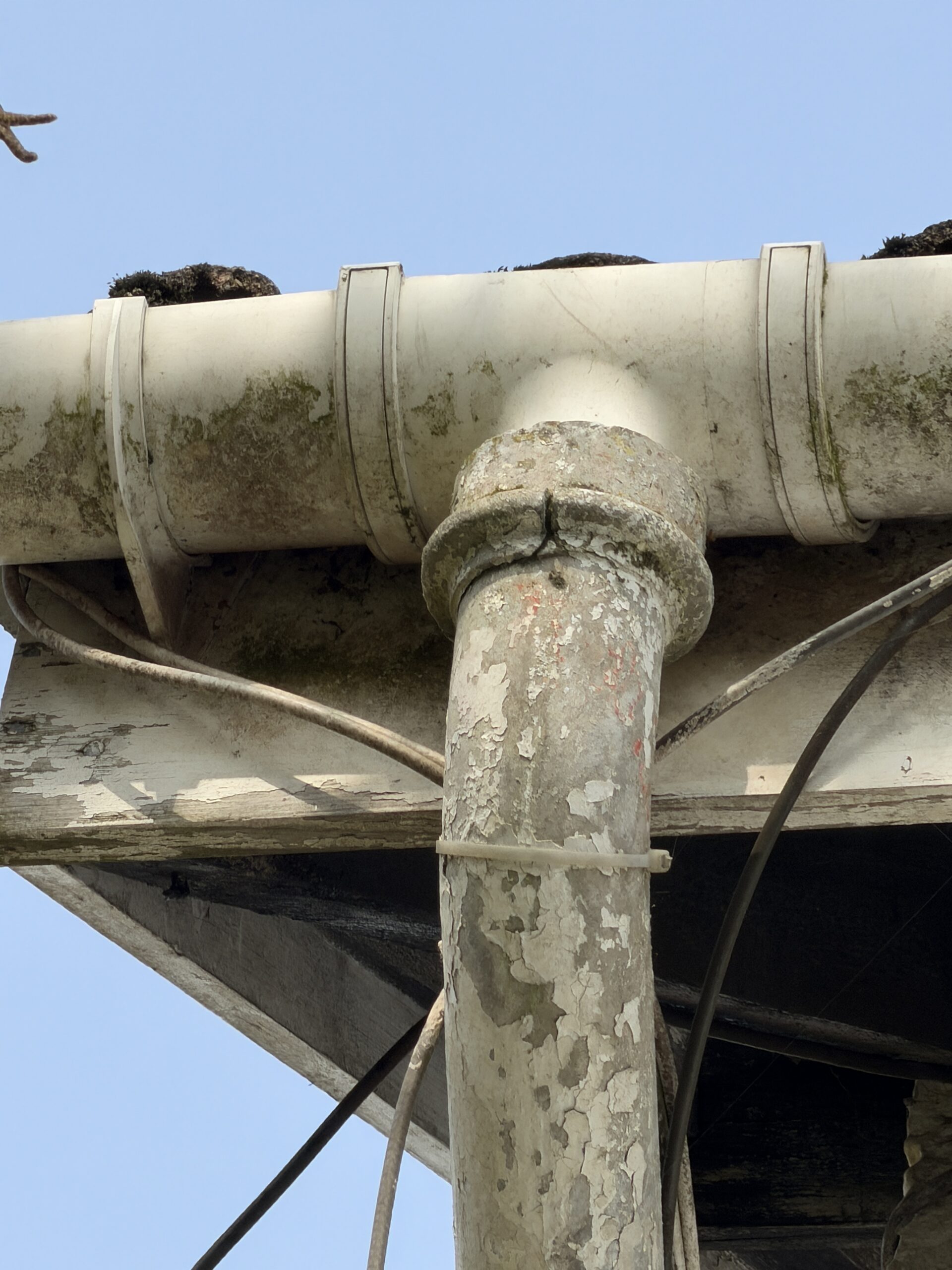
The rainwater goods here were noted to be aged and weathered, with staining, organic growth and deterioration around the gutter and downpipe junction. The gutter appears to be uPVC, while the downpipe is of an older cementitious type which may contain asbestos. Cracking and deterioration were visible around the pipe collar, increasing the risk of leakage, poor discharge and dampness to the adjoining fabric if left unresolved
Roof void & party walls
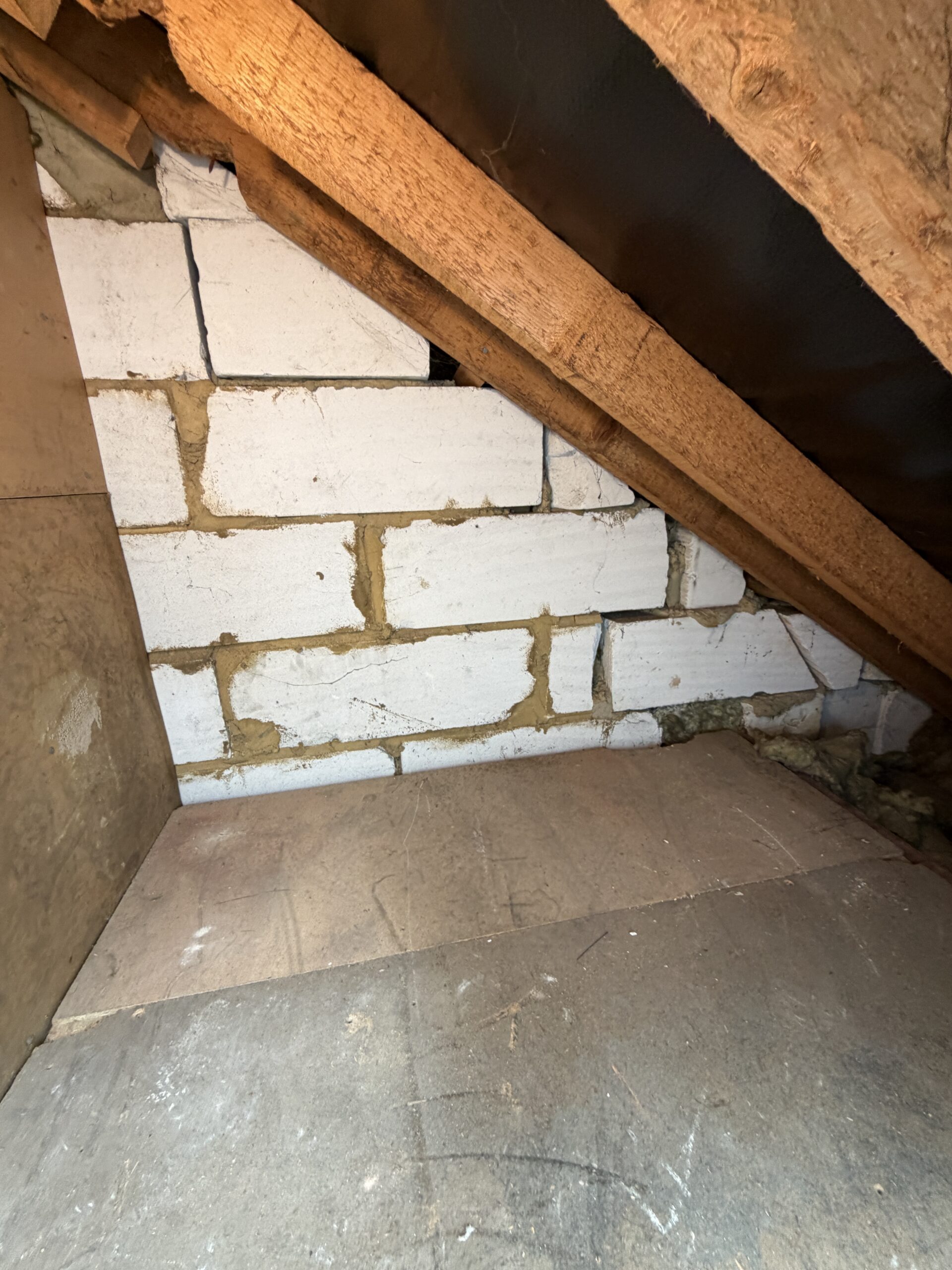
Within this roof void, the party wall was formed in blockwork, but sections of the mortar joints were incomplete and poorly pointed. Gaps were visible between blocks and around the abutment with the roof structure. This is a potential fire separation defect, as party walls within roof spaces should provide an effective barrier to restrict the spread of fire and smoke between adjoining properties. Open joints can also allow draughts, dust, smoke and sound transfer.
Alterations & extensions
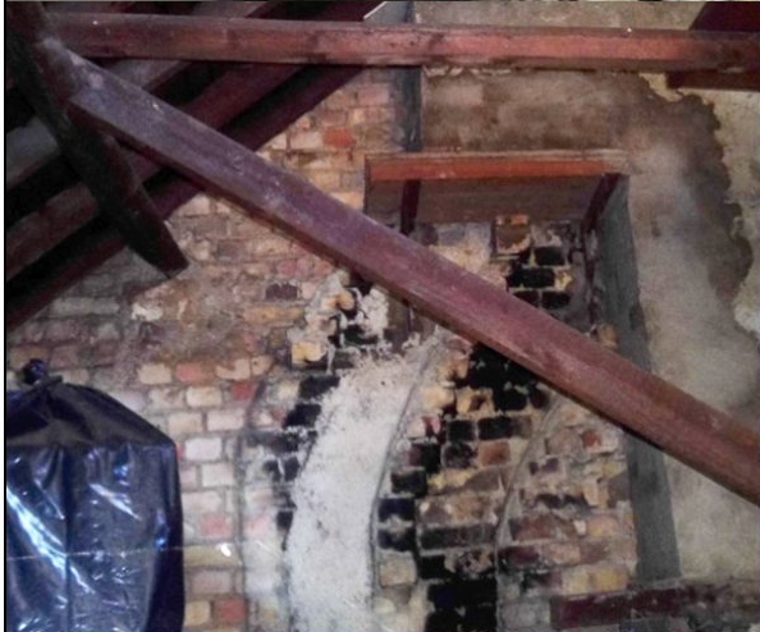
Done badly, or without proper consents, alterations can carry legal, safety and cost consequences for a buyer. We identify what's been changed and whether it raises questions worth resolving.

Roofing framework
Omissions, cut timbers or unsympathetic alterations can compromise a roof's stability and lead to expensive repairs. We examine the framework and report on anything that threatens its integrity.
When to upgrade to a Level 3 Building Survey
A Level 2 Home Survey is the right choice for most conventional homes in reasonable condition. But some properties — and some buyers — benefit from the deeper, more technical inspection of a RICS Level 3 Building Survey (formerly known as a Full Structural Survey).
Clients typically opt for the upgrade when a property is older, larger, unusually built or has clearly been altered or extended. A Level 3 survey goes beyond rating defects: it explains the likely cause of each problem, how serious it is, the probable repair options and the consequences of doing nothing — giving you the detail you need to budget, negotiate or plan works with confidence.
You might consider a Level 3 survey if the property is:
- Older (typically pre-1930) or of non-standard construction
- Listed, period or has heritage features
- Visibly altered, extended or converted
- In a neglected or run-down condition
- One you intend to renovate, extend or substantially change
Our drones help us see defects ground level misses
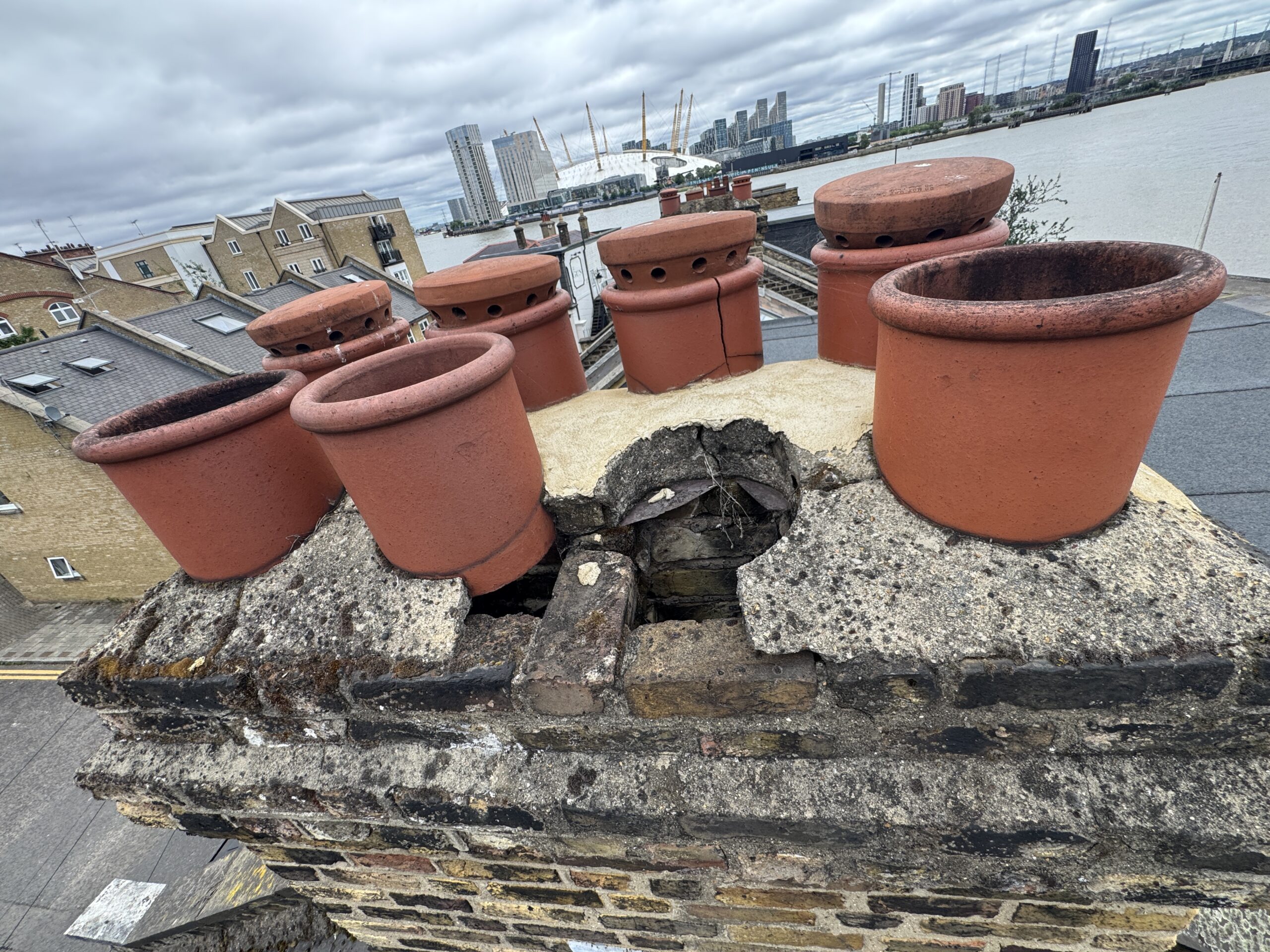
Chimney stacks and high-level roof slopes hide some of the most serious defects — cracked pots, eroded flaunching, spalled brickwork and slipped tiles — yet they're the hardest areas to see from the ground. We fly drones to capture the stack, ridge, valleys and coverings, so problems are recorded, not guessed at.
- CAA-licensed, fully insured pilots — roofs and chimneys up to seven storeys
- Included on all surveys, Level 2 and Level 3, whenever weather and location allow
- Also invaluable for loft conversions, where the roofing framework is concealed

A survey shaped around your concerns
Before we inspect, we ask what you're hoping to get out of the survey and whether anything about the property already concerns you — damp you've spotted, a crack you're unsure about, possible Japanese knotweed, or a past alteration.
Every report carries a dedicated section for your requests, and wherever we can, we make sure they're answered — so the survey does the specific job you need it to, not just the standard one.
Tell us, and we'll look closely
Upgrade your report
With any Level 2 or Level 3 survey you can add an independent Market Valuation, a buildings reinstatement (insurance) figure, or both. Take either on its own, or combine the two at a discounted rate.
Add-ons from £80 + VATIndependent Market Valuation
If you're buying with a mortgage, remember the lender's valuation is for them, not you — it assesses their lending risk and you may never see a copy.
Our RICS Registered Valuers give you a Market Value figure based on comparable transactional evidence and the property's own characteristics. Buyers often use it to renegotiate when the agreed price sits above our assessment.
From £199 + VAT
Buildings reinstatement (rebuild) cost
Most UK homes are over- or under-insured. A reinstatement cost sets out the appropriate amount to insure the property for — often very different from the purchase price or market value.
Buying a flat? Buildings insurance is normally the freeholder's responsibility, so we don't provide a figure for an individual flat — but we can quote separately for the whole building if you need it.
From £80 + VAT
Not sure what a finding means? Talk to your surveyor.
If anything is unclear, speak to the surveyor who inspected the property. We take however long is needed to talk it through — until the report makes sense and you feel confident about your decision.
Need further investigation? Ask the seller for access.
Where we recommend a specialist — a building contractor, or a roofing or damp firm — it's reasonable to ask the seller to allow access so those checks can be carried out before you commit.
The aim: as much information as possible.
A survey exists to arm you with everything you can know about the property's condition, the repairs it needs and their likely cost, before you're contractually bound.
Protect a major, long-term investment.
Whether you plan to live there or let it out, a home is a significant and lasting expense. A thorough survey helps you avoid costly surprises after completion.
One size does not fit all
It's important to choose the right survey for the property and your own requirements. The table below is based on the RICS information sheet, "Helping you choose the right survey".
| Service feature | Level 2 Surveyformerly HomeBuyer | Level 3 Surveyformerly Building / Structural |
|---|---|---|
| Describes the construction and condition on the date of inspection | ||
| Identifies problems that need urgent attention or are serious | ||
| Identifies things to investigate further to prevent serious damage | ||
| Tells you about problems that may be dangerous | ||
| Shows up potential issues and defects before a transaction takes place | ||
| Helps you decide whether you need extra advice before committing | ||
| Enables you to budget for repairs or restoration | ||
| Advises on ongoing maintenance required in future | ||
| Establishes how the property is built, what materials are used and how they'll perform | — | |
| Describes visible defects, plus potential problems posed by hidden defects | — | |
| Outlines repair options and a timeline, explaining the consequences of not acting | — | |
| Provides specific comments on energy efficiency | — | |
| Where practical and agreed beforehand, provides an estimate of repair costs | — | — |
A few we've carried out lately
A sample of recent Level 2 (HomeBuyer) surveys across London and the surrounding counties.
Extended 1930s semi, long vacant
We found dampness in the roof void to the party-wall masonry and chimney breast, and advised replacing shrunken cement fillets with lead flashing. Damp to the main walls warranted further specialist investigation, and a detached garage showed structural defects and electrics below current safety standards.
Ground-floor flat in a converted 1930s semi
A 1930s semi heavily converted into six units. We found dampness and poorly maintained communal areas and grounds, and advised the client that the agreed purchase price was, in our view, excessive.
Victorian mid-terraced house
No major defects, but we reported on maintenance to the external solid brickwork and on the sliding sash windows — some with broken cords, which can be awkward and costly to repair.
1960s end-terrace, non-traditional build
Built using 'Wimpey no-fines' solid shuttered-concrete construction, which had caused the client some concern. Our inspection revealed no major defects, giving reassurance and peace of mind.
Extended 1930s mid-terrace, needing updating
We found dampness and roof repairs, and raised concerns about the construction of the rear extension and a detached garage reached via a rear service road.
Converted top-floor flat, former Victorian end-terrace
Split into three units. We found extensive penetrating damp and rot to single-glazed sash joinery, and advised on maintenance issues that could carry financial liability.
Converted top-floor flat, former Victorian mid-terrace
We identified penetrating damp to the roof-void party walls and rot to the external joinery.
Converted ground-floor flat, former Victorian mid-terrace
We found rising damp to the solid brick masonry walls, and dilapidated outbuildings with asbestos panels.
Renovated and extended 1930s semi
A large wrap-around addition, with missing and loose roof tiles and sprayed foam beneath the covering — we warned this raises the risk of concealed rot and makes repairs harder. An unseen valley gutter and a damp chimney breast were also noted.
1930s semi, probate refurbishment project
We found damp and defective joinery and rainwater goods, and advised establishing the cost of works and renegotiating the purchase price.
Refurbished Victorian mid-terrace
No major defects; we advised on maintenance points and gave reassurance on the alterations that had taken place, enhancing the property's appeal.
Victorian mid-terrace with structural alterations
We found damp party-wall masonry, deteriorated mortar joints and a removed chimney breast supported in a way that no longer meets requirements. We advised the price was excessive.
Extended 1970s semi, bought under probate
Only minor issues — services upgrades and some flat-roof maintenance — giving the client comfort to proceed once costs were established.
Modern 1990s estate house
Reconfigured from three bedrooms to two. No particular defects, but we advised the client that the agreed price was, in our view, excessive.
Extended 1950s semi
A blocked valley gutter and defective hopper between two gabled roofs, rusted rainwater goods, and retrospectively installed cavity insulation — which can, in some cases, drive damp or accelerate wall-tie corrosion.
1920s Arts and Crafts detached house
A rare example of its era. We reported damp to the chimney breasts and walls, cracked and loose render cladding, and some internal joinery issues.
Level 2 survey: frequently asked questions
How much does a Level 2 survey cost?
What is a Level 2 survey, and how does it differ from a Level 3?
Do I need a Level 2 or a Level 3 survey?
What do the condition ratings in a Level 2 report mean?
How long does a Level 2 survey take, and when will I get the report?
What happens after the survey?
Will you inspect the roof and chimneys on a Level 2?
Can I tell the surveyor what I'm worried about?
Can I add a market valuation or an insurance figure to a Level 2?
Why choose Websters for a Level 2 survey?
Request a bespoke quote
Tell us about your property and we'll come back with a clear, fixed price — and explain the options so you can decide on scope, not guesswork. We'll also explain the optional valuation and insurance add-ons, and our drone aerial photography up to seven storeys.
Prefer to talk?020 8017 1943