

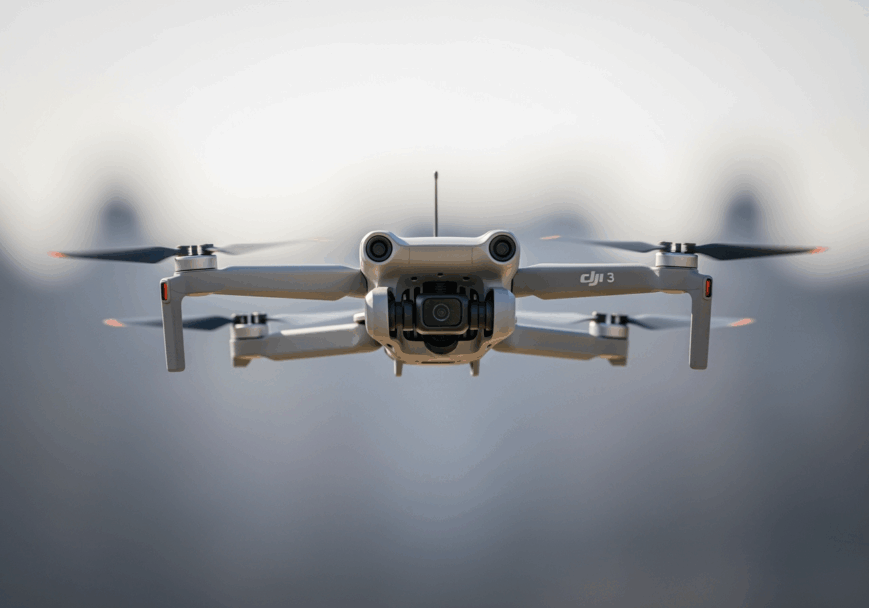
A growing number of home surveys now include a drone inspection of the roof and other high-level areas, and at the better end of the profession it’s becoming standard rather than a gimmick. A drone lets a surveyor see the parts of a property that matter most and are hardest to reach: the roof slopes, chimney, gutters, flat roofs and high-level detail that can’t be inspected safely, or at all, from the ground. Given that roof problems are among the most expensive defects a buyer can inherit, that extra view can make a real difference to what you pay and what you take on.
At Websters we fly drones as part of our home surveys on properties up to seven storeys. Here’s how they’re actually used, what they reveal, and how to make sure your own survey benefits from one.
How are drones used in a home survey?
A drone is used to carry out a close, aerial inspection of the parts of a property a surveyor can’t safely reach on foot. Instead of assessing a roof through binoculars from the pavement, the surveyor flies the drone over and around the building, capturing high-resolution photographs and video of the roof coverings, ridge, valleys, chimney, flashings, gutters and any flat-roof areas.
That footage becomes part of the evidence behind the report. It means defects are identified from clear, close-up images rather than guessed at from sixty feet below, and you get to see the same pictures the surveyor based their conclusions on. The result is a safer inspection, with no ladders or scaffolding, and a more thorough one, because the camera goes where a person on the ground simply can’t.
What can a drone see that a ground-level inspection can’t?
Plenty, and usually the expensive bits. From the ground, a surveyor can see the front roof slope and little else with any confidence. A drone reveals the rear and side slopes, the far pitches hidden behind the ridge, flat roofs over extensions and bays that are invisible from below, the condition of the chimney stack and its flashings, blocked or failing gutters, and lead detailing around valleys and parapets.
These are exactly the areas where serious, costly problems hide: slipped or cracked tiles, failed flashing letting water in, a tired flat roof nearing the end of its life, or vegetation and debris blocking drainage. Spotting them before you buy is the difference between negotiating on a known repair and discovering it yourself, at full cost, the first winter after you move in.
Why does a drone roof inspection matter for buyers?
Because the roof is one of the most expensive things on a house to put right, and one of the easiest to overlook. A new roof or a significant repair can run well into five figures, and very little of the roof is visible during a normal viewing or from ground level. A drone inspection turns the roof from a blind spot into a documented, photographed part of the survey.
For you as a buyer, that means fewer nasty surprises and a stronger negotiating position. If the survey shows a roof problem with clear aerial evidence, that’s something concrete you can use to renegotiate with the seller. And if the roof is genuinely sound, you get the reassurance of knowing it, rather than buying on hope.
Are drones particularly useful on loft conversions?
Yes, and this is where they earn their keep. In an ordinary house, a surveyor inspects the roof structure from inside the loft, finds any defects, then looks outside to understand the cause. In a converted loft, the roof framework is boarded over and hidden, so that internal inspection isn’t possible. The very area most likely to hide a problem is concealed.
That’s exactly when reliable external images matter most. A drone lets the surveyor examine the outside of the roof in detail to identify the cause of defects that can’t be seen from within, and to check the standard of the conversion’s external work. If you’re buying a home with a loft conversion, a drone inspection isn’t a luxury; it’s one of the better ways to understand what’s going on above your head.
How high can a drone survey go, and what properties suit it?
We fly drones on properties up to seven storeys, which covers the vast majority of houses and flats. It’s useful on almost any property with a roof you can’t see properly from the ground, but it comes into its own on taller, larger or more complex buildings, period properties with intricate roofs, and high-value homes where the cost of a missed defect is greatest.
For a simple modern bungalow, the roof may be largely visible anyway. For a three-storey Victorian villa with multiple pitches, valleys, chimneys and a rear extension, a drone transforms how much the surveyor can actually see. The more complex the roof, the more a drone adds.
Is it safe and legal, and are your surveyors qualified to fly?
Yes on all counts, and that’s not something every firm can say. Flying a drone commercially is regulated by the Civil Aviation Authority, and it requires proper certification, training and insurance to do legally and safely. Our team is CAA-compliant, fully insured and certified to fly.
This matters because not every surveyor who mentions drones has actually invested in the qualification and equipment to use one properly. A drone inspection is also far safer than the alternatives, with no working at height on ladders and no scaffolding to hire, which removes risk for everyone while improving what the survey can see. When you instruct a surveyor who flies, you get both a safer inspection and a more complete one.
Are there things a drone can’t do?
Yes, and it’s worth being clear about them. A drone can’t fly in high winds or heavy rain, so occasionally the conditions on the day mean aerial images have to be limited or rearranged. Airspace near airports, flight paths and other restricted zones can limit or prevent flying, which matters in parts of London in particular. And a drone inspects the outside only: it’s a powerful complement to a full survey, not a replacement for the internal inspection, the moisture readings and the rest of the work.
A good surveyor uses the drone for what it’s brilliant at, the roof and high-level detail, and uses their own eyes, hands and experience for everything else. The two together give you the complete picture, which is the whole point.
How do I make sure my survey includes a drone inspection?
Ask. When you request a quote, check whether the surveyor uses a drone, whether they’re CAA-certified to do so, and whether it’s included for your property. It’s a simple question that tells you a lot about how thorough a firm really is.
At Websters, drone inspection is part of how we approach both our Level 2 HomeBuyer Report and Level 3 Building Survey where it adds value, up to seven storeys. If you’re buying a property with a roof you can’t see from the ground, which is most of them, it’s worth making sure your survey can.
Thinking about a home survey?
A drone is one of the ways a thorough survey sees what a cheaper one misses. Websters Surveyors is an RICS-regulated practice carrying out home surveys across London and the surrounding counties, including Hertfordshire, Essex, Surrey, Berkshire and Buckinghamshire, rated 4.9 across more than 300 Google reviews.
Request a quote or call us on 020 8017 1943 and ask about drone inspection for the property you’re buying.
Frequently asked questions
Do home surveyors use drones? Some do, but not all. Flying a drone commercially requires CAA certification, training and insurance, so it tends to be the more thorough, better-equipped firms. It’s worth asking before you instruct, as a drone gives the surveyor a far better view of the roof and high-level areas.
Is a drone survey better than a normal survey? A drone isn’t a survey in its own right; it’s part of one. Used within a full Level 2 or Level 3 survey, it lets the surveyor inspect the roof and high-level detail far more thoroughly than from the ground, which makes the overall survey more reliable.
Can a drone inspect a flat roof? Yes, and this is one of its biggest advantages. Flat roofs over extensions, bays and outriggers are usually invisible from ground level, so a drone is often the only practical way to assess their condition without scaffolding.
Does a drone replace going into the loft? No. The surveyor still inspects internally wherever possible. A drone is especially valuable on loft conversions, where the roof structure is boarded over and can only be assessed from outside, but it complements the internal inspection rather than replacing it.
Do you need a licence to fly a drone for a survey? Commercial drone use is regulated by the Civil Aviation Authority and requires the correct certification and insurance. Websters’ surveyors are CAA-compliant, insured and certified to fly, which is what allows us to include drone inspections safely and legally.