


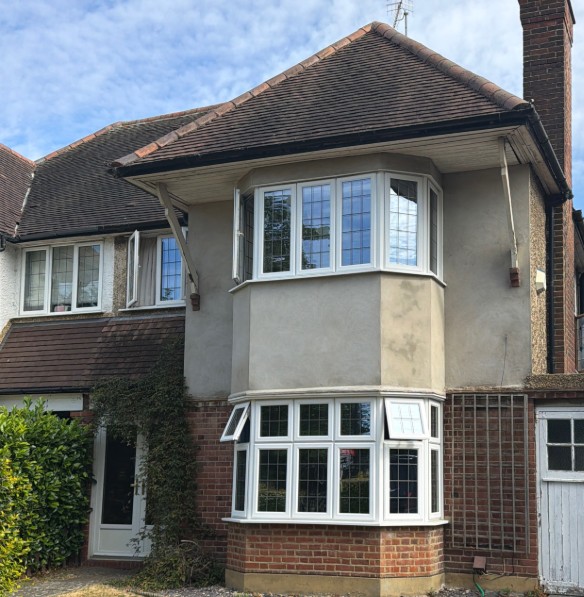
It’s one of the questions we’re asked most in London and the home counties. A 1930s semi looks solid and familiar — but it sits right on the line where a HomeBuyer Report starts to fall short. Here’s how to decide with confidence.
If you’re buying a 1930s semi-detached house, you’ve almost certainly reached the moment every buyer reaches: the estate agent mentions a survey, the mortgage lender mentions a valuation, and you’re left wondering whether the cheaper Level 2 report will do — or whether you should pay more for the full Level 3.
My honest answer, after inspecting a great many of these houses across London and the home counties, is that a 1930s semi is usually a Level 3 property. Not always — but usually. Below I’ll explain why, where the exceptions genuinely apply, and how to make the call for the specific house you’re buying rather than houses in general.
First, what’s the actual difference?
The RICS Home Survey Standard sets out three levels. For a house purchase, the two that matter are Level 2 and Level 3.
A Level 2 HomeBuyer Report gives you a clear, traffic-light picture of a conventional property that’s in reasonable condition. The surveyor inspects everything that’s readily accessible and rates each element 1, 2 or 3. It’s an excellent, proportionate report — for the right house.
A Level 3 Building Survey is the most detailed inspection RICS offers: an element-by-element assessment of the roof, walls, floors, services and grounds, describing not just what is wrong but why, how urgent it is, and what putting it right is likely to involve. It’s built for older, altered, extended or non-standard homes — which is where a 1930s semi so often ends up.
The short version: Level 2 is designed for conventional properties in reasonable condition. A 1930s semi is nearly a century old and has usually been altered at least once. That combination is precisely what Level 3 exists for.
Why a 1930s semi pushes towards Level 3
The interwar semi is one of Britain’s best-loved house types, and structurally most were well built. But “well built in 1935” and “well understood in 2026” aren’t the same thing. Here’s what nearly a hundred years does to a house like this — and why it rewards a closer look.
What we typically find in a 1930s semi
- Bay windows on shallow foundations. The projecting front bay is a signature of the era — and often built on foundations shallower than the main house. Differential movement and cracking around bays is one of the most common things we assess.
- Early cavity walls and wall ties. The 1930s was the changeover from solid to cavity construction. Where cavities exist, the original metal wall ties are now around 90 years old and can corrode, which a rated Level 2 report isn’t designed to investigate in depth.
- Ageing roof coverings and chimneys. Original clay or early concrete tiles, lead flashings and chimney stacks are well past their design life. Our surveyors include drone roof inspection, so the parts you can’t see from the ground get looked at properly.
- Damp-proofing near the end of its life. Slate or bituminous DPCs from the period can fail, and decades of raised ground and paths bridging them are common. Rising and penetrating damp both need diagnosing, not just flagging.
- Undocumented alterations. Removed chimney breasts, knocked-through reception rooms, loft conversions and rear extensions are almost universal in these houses — and frequently done without records or building control sign-off.
- Clay soils and mature trees. Across much of London and the home counties these semis sit on shrinkable clay soils, and interwar streets are often tree-lined. That’s the classic recipe for subsidence and heave, and it deserves a surveyor who’s looking for it.
None of this means a 1930s semi is a bad buy — most are wonderful, durable homes. It means the questions worth asking about one are exactly the questions a Level 2 report isn’t structured to answer. A Building Survey gives the surveyor the scope to open up the reasoning, weigh causes, and tell you what a repair actually involves before you’re committed.
Level 2 vs Level 3 for a 1930s semi, side by side
| Level 2 HomeBuyer | Level 3 Building Survey | |
|---|---|---|
| Best suited to | Conventional homes in reasonable, unaltered condition | Older, extended, altered or non-standard homes |
| Level of detail | Condition ratings (1–3) on accessible elements | Element-by-element analysis with causes & remedies |
| Explains why a defect exists | Limited | Yes — diagnosis and likely cause |
| Repair advice & urgency | Brief | Detailed, with priorities and timescales |
| Bay foundations, wall ties, hidden alterations | Flagged if obvious | Actively investigated |
| Guide fee (Websters) | From £650 + VAT | From £900 + VAT |
The gap in price is real but modest — a few hundred pounds on a purchase worth hundreds of thousands or more. Against the cost of an undiagnosed subsidence issue, a failing roof, or an extension that was never signed off, the fuller report tends to pay for itself many times over on a house of this age.
Not sure which level your semi needs? Tell us the address and a little about the property and we’ll give you a straight, no-obligation recommendation and a fixed quote. Request a quote or call 020 8017 1943.
When is a Level 2 genuinely enough?
I don’t want to talk anyone into spending more than they need to. There are 1930s semis where a HomeBuyer Report is a perfectly sensible choice, and it usually comes down to a few honest questions:
- Has the house been well maintained and largely unaltered, with no obvious extensions or internal remodelling?
- Are there no visible signs of movement — no stepped cracking around the bay, no doors and windows out of square?
- Is it away from large trees and not on a road with a history of subsidence claims?
- Has the roof been recently and properly renewed, with paperwork?
If you can answer yes to all of those with confidence, a Level 2 HomeBuyer Report may serve you well. But that’s a lot of yeses for a house approaching its centenary — and if you’re unsure on even one, the Building Survey is the report that removes the doubt rather than restating it.
The bit buyers forget: your solicitor needs this too
A good survey doesn’t just protect you — it moves your purchase along. With every Level 2 and Level 3 report, we include a complimentary Solicitor’s Summary Report. It distils the survey’s key risks and urgent matters into a short document your conveyancer can act on straight away, so the right enquiries get raised with the seller early instead of surfacing late and stalling the deal.
On an older semi — where alterations and their paperwork are exactly the sort of thing solicitors need to chase — that summary can be the difference between a smooth exchange and weeks of back-and-forth.
My recommendation
For a typical 1930s semi in London and the home counties, I’d steer you towards a Level 3 Building Survey. The age of the fabric, the near-certainty of past alterations, and the region’s clay soils mean the fuller report almost always tells you something worth knowing before you commit. Where a house is demonstrably well kept, unaltered and free of any sign of movement, a Level 2 can still be the right, proportionate choice — and we’ll tell you so honestly rather than upsell you.
Either way, the most valuable thing you can do is talk to the surveyor who’ll actually inspect the property before you book. Send us the details and we’ll tell you which level we’d recommend for your house, and why.
In a sentence: a 1930s semi can take a Level 2 — but it’s built for a Level 3, and that’s usually the report I’d choose for my own family.
About the author — Dan Knowles FRICS. Dan is a Fellow of the Royal Institution of Chartered Surveyors (FRICS) and Director of Websters Surveyors, a RICS-regulated practice specialising in residential surveys and valuations across London and the home counties. He has inspected hundreds of period and interwar homes and leads a team known for clear, plain-English advice that helps buyers make confident decisions.